Gold bracelets can be considered one of the most beautiful and expensive accessories; but have you ever wondered what a gold bracelet symbolizes? This shiny yellow metal has long been worn close to the skin because of what it represents in the collective belief of mankind. Gold bracelets have not been ornaments throughout history; they have been a document of identity, a shield of protection, a language of emotion and sometimes even a tool of diplomacy.
Gold in the Sphere of Myth and Divinity
The ancient Greeks called gold the child of Zeus. This attribution was considered a supernatural gem in Hellenic belief that brought the person who used it closer to the circle of immortality. Epic writers depicted their heroes with golden belts, sandals and swords to narrate their goodness and invincibility based on this metal.
In Minoan Crete, in the third millennium BC, gold resided in burial mounds before it found its way into palaces. Archaeologists have found gold bracelets alongside bronze daggers and ivory seals, evidence that gold was a sign of elite membership and a symbol of hereditary status in early European civilization.
Bracelets as amulets and protection
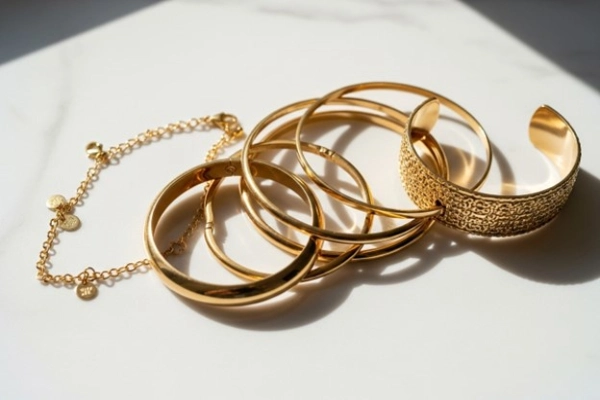
In many cultures, gold bracelets were considered portable fortresses against unseen forces. The Greeks attributed a protective role to every gem. But perhaps the most explicit expression of this belief can be seen in the Judeo-Islamic bracelets of North Africa. These bracelets were engraved with patterns of blessing, protection, and the wearer’s name; constellations such as Pisces, a symbol of fertility and abundance, sat on the gold to ward off the evil eye.
The Symbolism of Gold Bracelets in Marriage Rituals
Perhaps the most universal role of gold bracelets is their presence in marriage rituals. In Chinese culture, the bride’s family is escorted to the house of fortune with a 24-carat bracelet; a golden orb engraved with a dragon and a phoenix. The dragon symbolizes yang and masculinity, the phoenix symbolizes yin and femininity, and together they are the tangible embodiment of perfect union, harmony, and balance.
The ancient Greeks also recorded the choice of jewelry on pottery as brides prepared for their weddings. Wearing gold on their wedding night ensured fertility and a connection to Aphrodite, the goddess of beauty.
Gold Bracelets Matrilineal Heritage
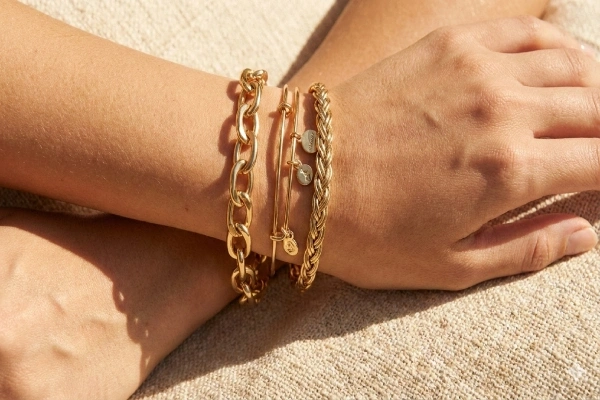
Gold bracelets are often passed down from mother to daughter, a lineage that, unlike family names that run through the father, perpetuates female mortality.
In Hawaii, a 160-year-old tradition has bound women to engraved gold bracelets. Queen Liliʻuokalani, the last monarch of Hawaii, wore a simple bracelet on her wrist in her engagement portrait with the words: “Hoʻomanaʻo Mau”; forever remembered.
Today, Hawaiian mothers engrave their daughters’ names on gold bracelets, so that when the child reaches puberty, the gold can be passed from mother to daughter. In Canada, Hande Al-Mawajili wears a 22-carat bracelet that her mother gave her on her wedding day six years ago; the same bracelet her In Hawaii, a 160-year-old tradition has bound women to engraved gold bracelets.
Queen Liliʻuokalani, the last monarch of Hawaii, wore a simple bracelet on her wrist in her engagement portrait with the words: “Hoʻomanaʻo Mau”; forever remembered. Today, Hawaiian mothers engrave their daughters’ names on gold bracelets, so that when the child reaches puberty, the gold can be passed from mother to daughter. In Canada, Hande Al-Mawajili wears a 22-carat bracelet that her mother gave her on her wedding day six years ago; the same bracelet her mother had received from her own mother on her wedding day.
The tradition dates back to 1915; the family’s great-grandfather bought such a bracelet for his fiancée, and now the gold is not just an object, but a 100-year-old story of family love.
Gold and the Metaphysics of Energy
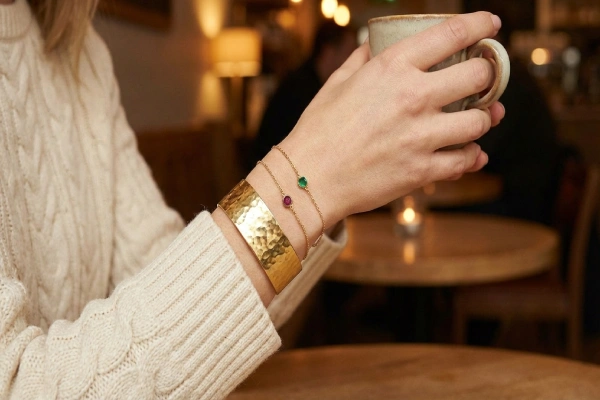
In the modern metaphysical tradition, gold is a conductor, not just of electricity, but of vital energy. It is believed that gold, due to its biological and chemical compatibility, harmonizes with and strengthens the body’s energy field.
Yellow gold stores the warmth of the sun and expands self-awareness and the fulfillment of dreams. Yellow gold deepens spirituality, and white gold channels both the energies of the sun and the moon. From the perspective of this tradition, a gold bracelet sits on the energy chakras and protects the individual from spiritual erosion, chronic fatigue, and negativity.
Whether we accept this belief or consider it modern myth, it cannot be denied that wearing gold transforms our state of being. The Hira bracelet from the Marysa jewelry, made of 24-carat pure gold, is faithful to this ancient tradition; a glow that sits not only on the skin but also on the soul.
Bracelets and versatility
One of the characteristics of gold bracelets is their ability to be engraved. Because gold is soft, it speaks. A name, a date, a sentence, even a badge.
In Hawaii, gold bracelets are engraved in beautiful black ink: “Ke Aloha O Ka Haku,” the Queen’s anthem in prison. This is the prayer that the last deposed monarch sang while under house arrest; an anthem of faith and forgiveness.
Today, this phrase shines on the wrists of Hawaiian girls, in memory of the Queen and of the female resistance to the humiliation of history.
In the Valora bracelet with a heart lock, Marysa continues this tradition of self-inscription. A lock that opens to contain someone’s name; and closes to keep that name close to the skin.
Bracelets and social status
From Minoan Crete to today’s Manhattan, gold bracelets have always been “badges.” Not badges in the sense of a symbol, but badges in the sense of a document.
In ancient Greece, women displayed their jewelry as identity documents. The more elaborate the bracelet, the wealthier the wife and the higher the family status. Men, however, would engrave their jeweled rings with the seal of kinship on wax paper; these rings were their owners’ birth certificates, just as Electra in Sophocles’ play recognizes her brother only by seeing her father’s seal on wax.
In Ghana, gold still shines in the crowns and bracelets of Ashanti chieftains. In this culture, accessories are text; every color and every pattern is a sentence that only those with meaning can read.
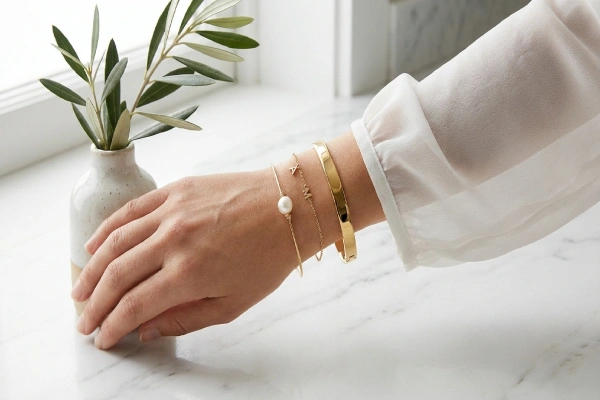
A gold bracelet for all times
Today’s gold bracelets still carry the same ancient meanings; but their language has become more modern. At Marysa, we honor the ancient tradition of gold bracelets;
but we present them in a modern setting. For example, the Hira bracelet embodies the same power and independence of the modern woman that the Minoan bracelet symbolized the power of the nobility three thousand years ago. The Solera bracelet, with its hammered 18-carat texture, keeps the warmth of traditional workshops alive on the wrist of today’s urbanite. If gold is your style language, we at Marysa are fluent in it.
Look for the best in this collection; perhaps the piece you are looking for has been waiting for years to tell your story.