



Choosing gold earrings starts with the right karat, style and fit. This gold earrings buying guide compares 14K, 18K and 24K gold and explores studs, huggies, hoops and piercing jewelry, helping you understand how materials and design affect comfort, durability and everyday wear.
We’ll also look at examples from Marysa’s solid gold collection and share practical care advice. Whether you prefer understated studs or statement hoops, browse our earrings collection with a clearer understanding of what suits your style and routine.
14K vs 18K vs 24K Gold Earrings: Purity, Durability, Color & Price
Gold earrings are measured in karats just like any other gold jewelry, and karat is simply a ratio: 24 parts represent pure gold, so the number tells you how much of the metal in a piece is actual gold versus other alloyed metals added for structure and color.
24K gold is as close to pure gold as jewelry gets, about 99.9% gold. That purity gives it a distinctive warm, deep yellow color, but pure gold is also a soft metal, so 24K pieces can pick up surface marks more readily with regular handling than lower-karat alternatives. It’s a look many people choose deliberately for its richness, understanding that a softer metal asks for a bit more care.
18K gold is 75% pure gold, alloyed with metals like silver, copper, or palladium for the remaining quarter. That balance keeps much of 24K’s warm color while adding meaningful structure, which is part of why 18K tends to be the practical middle ground for earrings worn often — studs and huggies especially, since they see repeated handling every time they go in and out.
14K gold is about 58.3% pure gold. With more alloy in the mix, 14K generally holds up well to frequent wear and tends to be more resistant to surface scratching than higher-karat gold, at a comparatively lower price point. It’s a common choice for pieces meant for constant, everyday rotation, including many piercing-specific designs.
Under FTC guidelines governing jewelry marketing, any karatage claim has to precisely reflect the metal’s actual, measured gold content, a piece can’t be labeled 18K if testing shows otherwise, and ‘gold’ claims generally need the karat stated plainly rather than implied.
Gold Earrings Buying Guide: Choosing Your Style
Once you know which karat you’re leaning toward, the next decision is shape and placement, and that has as much to do with comfort as it does with style.
Gold stud earrings sit directly on the earlobe with minimal surface area, which is part of why they’re often the most comfortable starting point for sensitive ears: less metal in contact with skin, and no moving parts to catch on hair or clothing.
Gold huggie earrings sit close to the lobe in a small hoop shape, offering a bit more presence than a stud while still staying secure and low-profile enough for daily wear.
Hoops, sized up from huggies, add more visible movement and are typically chosen as a slightly bolder everyday statement rather than an all-day-every-day default. For something between a huggie and a larger style, small gold hoops offer a modest step up in movement while still sitting close to the ear.
Piercing jewelry, for cartilage, tragus, and helix placements, is a different category altogether, designed around the specific anatomy and healing needs of those piercing sites rather than the earlobe.

Evil Eye Tragus Piercing Earring
Marysa’s Evil Eye Tragus Piercing Earring, for example, is a solid 14K gold piece with a polished eye motif and a mini diamond center, sized for tragus placement. The Safety Pin Tragus Piercing Earring takes a more graphic approach, in solid 14K gold with a modern safety pin silhouette and natural diamonds. For helix piercings, the Spike Helix Piercing Earring offers a solid 14K gold design with a minimal spike detail, built for that specific placement rather than adapted from an earlobe stud.
If you’re deciding between a stud and a huggie or hoop for everyday wear, it often comes down to how much movement and visibility you want.
Is Marysa Solid Gold? Craftsmanship & Material Standards

Marysa is a family-led, woman-owned fine jewelry brand, and that ownership shapes a fairly specific material stance behind every pair of Marysa gold earrings: the brand prioritizes solid gold, primarily 18K, with selected 14K and 24K designs chosen according to how a piece is meant to be worn.
On the question of whether Marysa’s gold earrings are solid gold with natural diamonds: the solid gold part is consistent across the collection referenced here, and every stone claim is verified against the individual product record before it’s described as containing natural diamonds, rather than applied as a blanket statement.
Production happens in small batches, with hands-on finishing and multi-stage quality control rather than large-scale, fully automated manufacturing.
Verified Solid Gold Earring Examples Across 14K, 18K & 24K
Here’s how that karat and style guidance plays out across some of the best gold earrings available today, organized by karat below.
24K Gold Earrings
- Firoozeh Earring — solid 24K pure gold construction.

Firoozeh Earring
$1,670.00 - Mar Earring — a solid 24K gold snake-shaped stud design with diamond accents.
Mar Earring
$1,259.00 - Circle Earring — a solid 24K organic round design embracing natural hand-hammered texture with a central diamond.
- Star Earring — a solid 24K gold celestial star stud with a diamond center.
- Lira Earring — a handcrafted solid 24K gold minimal square stud featuring a hand-hammered finish and plastic push-backs.


14K Gold Earrings
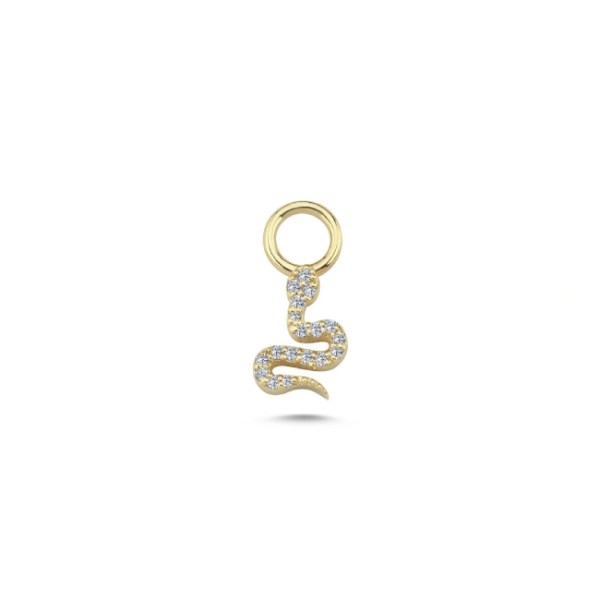
- Snake Charm Earring — a solid 14K gold snake charm with natural diamonds, designed for earring loops.
Snake Charm Earring
$249.00
18K Gold Earrings
- Bee Earring — solid 18K yellow gold bee stud earrings with push-back closures.
Bee Earring
$685.00 - Linae Earring — solid 18K yellow gold architectural hoops featuring sculptural cone accents.
Linae Earring
$899.00 - Aeris Earring — solid 18K gold statement drop earrings featuring a diamond accent and two graduated dangling pearls.


Where diamond accents appear across these pieces, grading and terminology for gemstones generally follow the educational standards set by GIA.
Caring for Solid Gold Earrings
Solid gold is a relatively low-maintenance metal, but ‘low-maintenance’ isn’t the same as no maintenance, and realistic expectations make a real difference in how a piece looks years in.
Keep earrings away from chlorine, harsh cleaning products, and prolonged contact with perfume or lotion where possible. Store pieces separately, ideally in a soft pouch or lined compartment. A soft, lint-free cloth is generally enough for routine cleaning.
Solid gold, including 24K, 18K, and 14K, will show some signs of wear with regular use, that’s true of any metal worn daily, not a flaw specific to any one karat.
For earrings with pearls, follow GIA’s pearl care guidance, which recommends gentle cleaning and avoiding ultrasonic or steam cleaners.
Conclusion: Finding Your Solid Gold Earrings
Narrowing down gold earrings gets easier once karat, style, and brand transparency are separated into their own decisions rather than one big choice.
Browse the Collection
When you’re ready to look at solid gold earrings by karat and style, our earrings collection is a straightforward place to start browsing.