
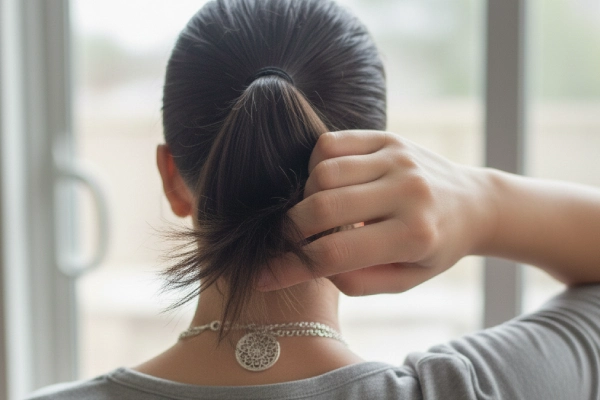
Delicate necklaces, especially solid gold chains, are attractive and valuable accessories for all of us, and their maintenance is also very important. But a seemingly simple and everyday challenge can damage the beauty and integrity of this accessory, and that is the issue of hair getting caught.
Hair getting caught in a necklace chain is an annoying condition that, if not handled carefully, can cause hair to stretch, break, and even solder or scratch the surface of the chain. In this article, we will introduce you to the safest techniques to get rid of this problem.
Why does hair get trapped in a necklace chain?
Delicate chains with interconnected rings have a structure similar to a fishing net on a microscopic scale. The hair cuticle (outer layer) is made up of tiny, upward-facing scales that get hooked when they encounter sharp edges or microscopic irregularities on the chain. This is more likely to happen with woven chains like cable, beaded, or Italian, because of the more contact surfaces. Friction from wearing clothes, wearing a scarf, or even sleeping can make the tangles even tighter.
Why does hair get trapped in a necklace chain?
Delicate chains with interconnected rings have a structure similar to a fishing net on a microscopic scale. The hair cuticle (outer layer) is made up of tiny, upward-facing scales that get hooked when they encounter sharp edges or microscopic irregularities on the chain.
This is more likely to happen with woven chains like cable, beaded, or Italian, because of the more contact surfaces. Friction from wearing clothes, wearing a scarf, or even sleeping can make the tangles even tighter.
First Steps to Removing Hair from a Gold Chain
Relax before you take any action. Rushing and pulling too hard will only result in more tangles or tearing the hair and damaging the chain. To do this, you will need the following tools:
- A very thin sewing needle or flat-head needle to untangle microscopic knots
- A pair of fine-tipped, flat-nose pliers, preferably stainless steel
- A piece of low-tack masking tape (such as washi tape or painter’s tape)
- An old makeup brush with soft, clean bristles
- A mild jewelry cleaning solution and a soft brush
Removing and inspecting the necklace
Carefully remove the necklace from your neck and lay it flat on a soft surface. With your fingers or pliers, gently grasp the part of the chain that the hair is wrapped around between your hands to minimize pressure on the other links. Use a magnifying glass to identify the exact location of the tangle. Is the hair wrapped around a specific link or between several links?

Gentle Penetration Method with Lubricant
Sometimes a natural lubricant can make a big difference by reducing friction. Apply a small drop of light oil, such as baby oil, coconut oil, or even jewelry degreasing oil, to the affected area. Wait a few minutes for the oil to penetrate. This will soften the hair cuticle and increase its slipperiness. Then, using a needle, gently start untangling the knot from the outermost point. Never use olive oil or heavy cooking oils, as their residue is difficult to remove and can become sticky over time.
The Precision Tape Method
For very short hair or fine strands of hair that are covering the surface of the chain, duct tape is an ideal tool. Wrap a small piece of low-tack tape around your finger (sticky side out). Gently roll the tape over the affected areas of the chain in a gentle, circular motion. The tape’s gentle adhesive will help to loosen the hair from the chain without pulling or putting pressure on the links. This method works best for very delicate chains like Zeva or Clarisse, which have a smooth, delicate structure.
The Tweezers and Needle Technique
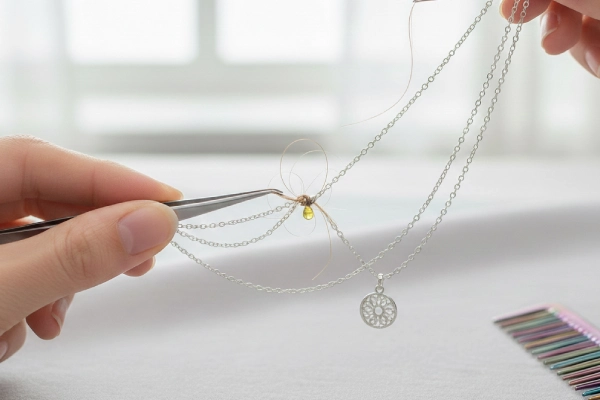
For tight, tangled knots, you’ll need to be more patient. Hold the chain link steady with one hand. With the other hand, use the needle to lift and untie the small loop of the knot. Hold the tweezers parallel to the hair strand and gently pull it out once the knot is loose. Always grab the hair as close to the chain as possible to reduce pressure on the hair root and tension on the chain. This technique is crucial for tightly woven chains like Novira or Sorelle, which can trap hair in the weave.
Necklace Chain Designs That Catch Less Hair
When choosing a gold necklace chain, pay attention to its design and look for the following:
- Smooth, even chains: Smooth cable chains (like Clarisse) or paperclip links (like Mirabel) offer fewer surfaces for hair to snag.
- Strong, textured chains without sharp edges: Designs like Figaro or Singapore have a great finish.
- Avoid very fine, open-weave chains: If you have very long, curly hair, chains like Venetian or Spiga may be more challenging and should not be used.
Marysa jewelry, such as the fluid, polished Liora or the uniquely textured Serelis with its exquisite finish, is made of pure, high-quality gold and designed with ergonomic and functional principles in mind to be both beautiful and a more comfortable companion for your fast-paced life.

Final cleaning and maintenance
Once the hair has been completely released, it’s time to bring the shine back to your chain. Gently dab it in a mild jewelry cleaning solution (preferably one that is ammonia-free and non-abrasive). Use a soft-bristled jewelry brush to remove any remaining oil or dirt from inside the loops. Then rinse with lukewarm water and dry thoroughly with a soft, lint-free cloth (like Marysa’s). This final step ensures that no more hidden hair snagging agents are left behind in the future. Here’s a summary of the key steps:
- Start in a relaxed, well-lit environment.
- Use a light lubricant for tight knots.
- Don’t forget the low-tack tape for fine hair.
- After solving the problem, thoroughly clean and dry the chain.
Caring for your precious jewelry is a process that will make it look even more beautiful. At Marysa, each piece is crafted with the utmost care and from pure gold to be a legacy for you to cherish for years to come. We believe that taking care of these treasures is part of the process of preserving and maintaining their value.
If you have any questions about jewelry care methods, choosing the best chain for your lifestyle, or need expert advice, our experts at Marysa are always ready to help. For a comprehensive buying guide and personalized advice, contact our experts to guide you in choosing and maintaining the ideal piece.


